
Starting a West Seneca Resident Search
Think of a West Seneca residents directory as separate trails, not one master roster. A current property question starts with Erie County's tax and parcel information. That lookup names the parcel and assessed owner. The owner's mailing address can still differ from the property address, though. Owners do not always live there. For an older household, pick the right library volume and year. Court, vital, and estate questions go to the custodian that created the record. A name match is only a lead. It becomes useful when a second fact supports it. That second fact might be an address, a legal description, a time period, a spouse, or a case number.
West Seneca records sit in several places at once. Some live at Town Hall, others at Erie County offices in Buffalo, and still more inside New York State systems. The Buffalo & Erie County Public Library holds the historical material. That split explains why a municipal FOIL request cannot replace a County Clerk deed search. A vital certificate is not an open name-search record either. Ask a precise question. The search gets faster. It also keeps a West Seneca records search from over-reaching what any single record proves.
- For a known West Seneca address, use the Erie County property entry point to obtain the parcel or SBL reference.
- Move a recorded-ownership question to the Erie County Clerk BrowserView index, using party, town, instrument, Book/Page, parcel, or legal-description routes.
- For a dated household, ask the Grosvenor Room for the appropriate West Seneca, suburban, Haines, or historical directory.
- Use court and vital-record channels only for the record type at issue, then confirm details with the named clerk or registrar.
- When an agency-held Town record is not online, send a focused request through the Town’s FOIL route, naming the address, period, and record class.
Note: Treat a missing West Seneca result as an open question, not proof that a person has no tie to a place.
West Seneca Resident Records Desks
Town material starts close to home. The West Seneca Town Clerk serves as Records Access Officer and handles Town-created records, licenses, archival material, and events kept by the local registrar. Parcel, tax, and deed work moves up to Erie County. The County Clerk's Registrar Division keeps land and title records. Real Property Tax Services and the county GIS supply the parcel layer. Voter registration runs through a separate state and county system. The West Seneca Streets page follows the address route in fuller detail.
Erie Real Property Tax Services
County parcel and tax assistance
716-858-8333
West Seneca Parcel Record Clues
Erie County's parcel systems keep two addresses apart. The situs address is where the property sits. The mailing address is where the assessment notice goes. The durable bridge between records is the parcel identifier. Erie's PIN pairs a county SWIS code with section, block, and lot, while the SBL is just the section-block-lot portion. Once an address search yields an SBL, it links the tax record, the map, and the recorded-document trail. Parcel data can also carry a local ZIP code, deed date, Book/Page reference, values, and building details. Not every field is filled for every parcel, though.
The Erie County Tax Inquiry landing page is the starting screen. It opens parcel search and tax functions. Read it as a current assessment clue, not proof of title or occupancy.
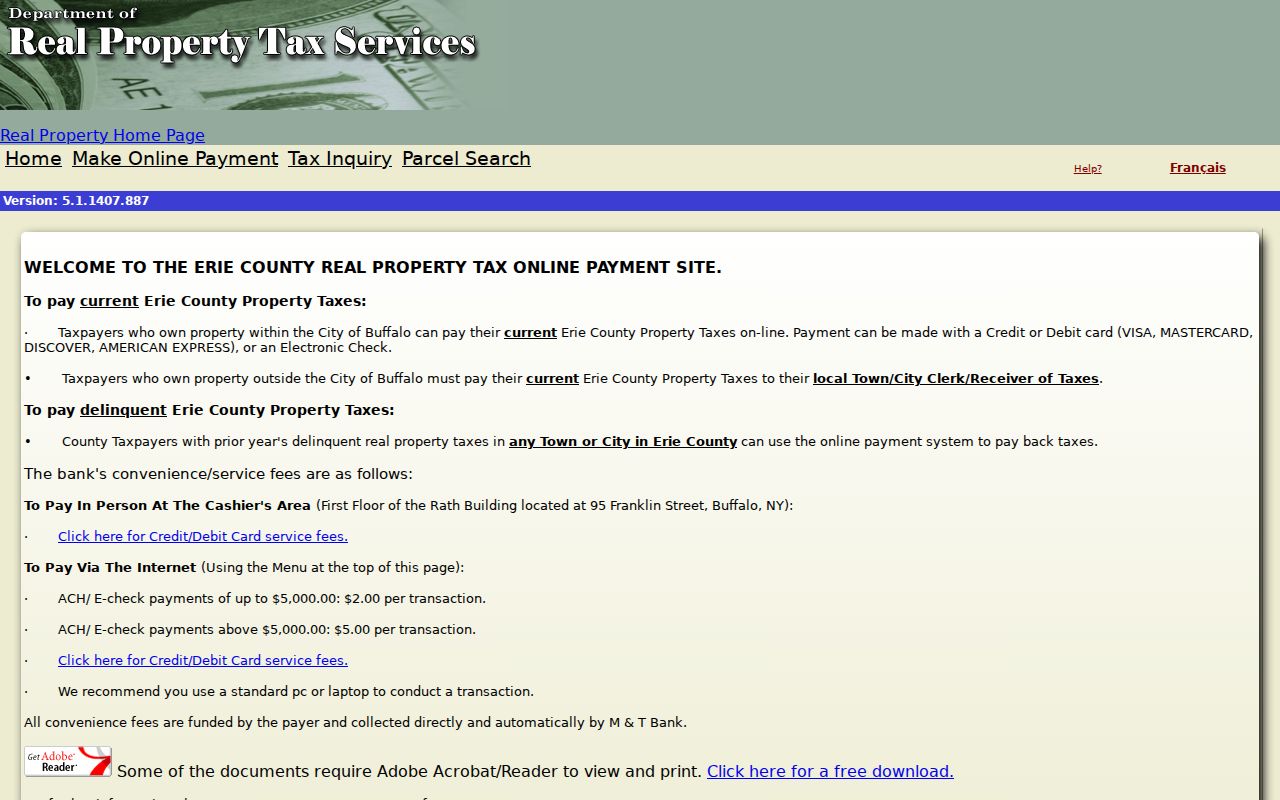
A public parcel narrows things fast. It pins a West Seneca residents search to one defined property before recorded documents or historical material enter the picture.
| Parcel field | How it helps | Important limit |
|---|---|---|
| PIN or SBL | Bridges map, roll, and legal description | Keep zeros and separators as the system expects. |
| Situs address | Locates the parcel in West Seneca | It is not the deed’s legal description. |
| Owner and mailing data | Identifies assessed ownership and correspondence | It does not establish every occupant. |
| Deed date or Book/Page | Supplies a lead for BrowserView | Recent parcel fields do not complete an older title chain. |
BrowserView is the official next stop once a parcel hands you a Book/Page, file, party, or legal-description bridge. The Clerk's index is not a street-address search. That gap trips up address-to-deed jumps. The Erie County Clerk's Official Records Public Search shows the recorded-document search options.
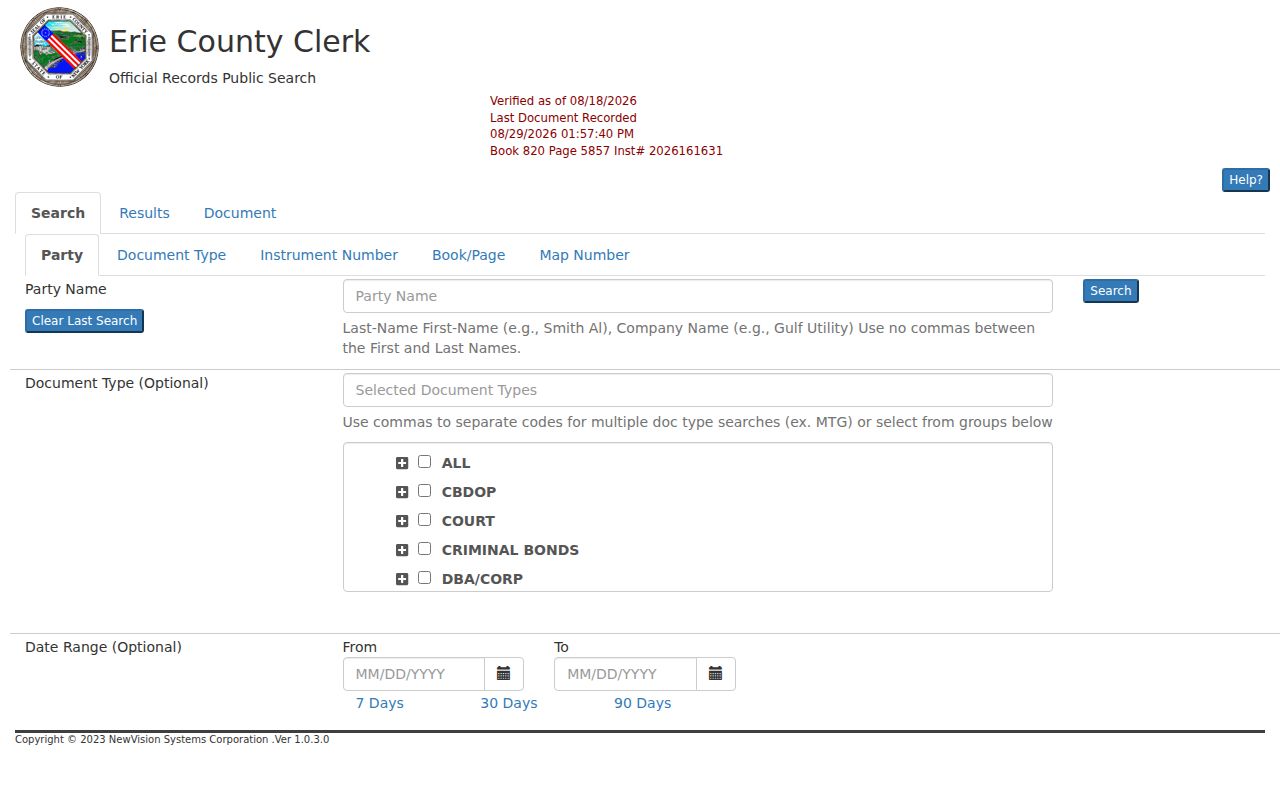
A deed index can turn a West Seneca parcel clue into a recorded party and legal-description trail. That trail does not prove anyone lives there now.
Current West Seneca Resident Sources
Current West Seneca resident sources answer different questions. A parcel roll covers assessed ownership. A deed index covers parties to a recorded instrument. A court tool covers a case within its scope. The voter tool is a registrant's self-service status check, not a public street roster. Matching each source to its own question keeps a West Seneca lookup honest, because stacking them into one people list would erase the access limits that custodians and New York law impose.
| West Seneca source | What it can confirm | Custodian | Access path |
|---|---|---|---|
| Tax roll and GIS | Assessed owner, parcel, situs, selected transfer facts | Erie County | Public property and mapping tools |
| Official Records Public Search | Party, document, date, legal-description trail | Erie County Clerk | Public index, counter or request for records |
| NYS VoterLookup | A registrant’s own status, poll site, and ballot information | New York State | Self-lookup with identifying information |
| Grosvenor Room volumes | Historical listings tied to a particular year and edition | B&ECPL | Reading room, catalog, or research service |
| West Seneca library yearbooks | Named school-year entries in held volumes | West Seneca Public Library | In-library collection; confirm a volume first |
The goal is sometimes a person. The West Seneca resident lookup route covers that case. It explains how to compare independent records without letting a single hit become a conclusion.
West Seneca Voter Status Limits
NYS VoterLookup lets a registered New Yorker check that person's own registration. It also covers polling place and ballot tracker details. The form asks for last name, first name, date of birth, county, and address information. It is not a West Seneca residents directory by street. New York Election Law §3-103(5) restricts use of voter-registration data to an elections purpose. A county request has its own purpose rules. Ballot choices never appear in a voter record.
The NYS VoterLookup screen shows the self-service format.
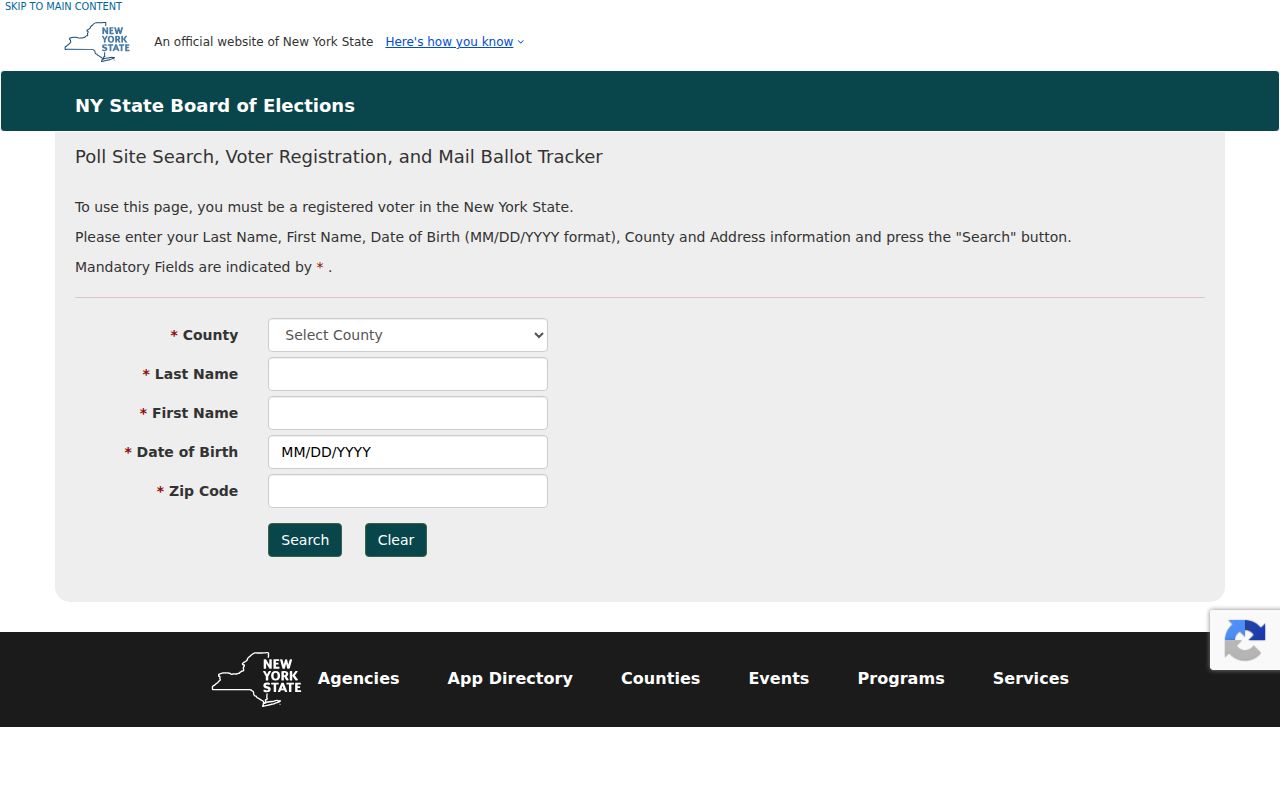
Treat any West Seneca result from that tool as the registrant's own status check. It is not a license to build address lists.
West Seneca Court and Vital Trails
Court paper trails help, but only up to a point. A case file can show that someone was part of a lawsuit in West Seneca. Yet it cannot prove where that person lives now. Through WebCivil Supreme, searchers can pull party names, index numbers, attorneys, firms, justices, calendars, and documents for Civil Supreme Courts. WebCriminal works from a first and last name or a corporation name. It also narrows by court. Each local bench is separate. West Seneca Town Court, Supreme and County Court, and Surrogate's Court each hold their own jurisdiction. Each also has its own clerk. Sealed, juvenile, family, and other protected matters stay out of ordinary public searching.
- Index
- A finding tool that identifies a record or party. It is not necessarily the document image.
- Docket
- The court’s case listing or record of filings and events for a particular matter.
- Certified copy
- A copy issued and authenticated by the custodian when the requester qualifies under that record system’s rules.
- Legal description
- The land description in a recorded instrument, often more stable than a street address.
West Seneca Records Requests Under FOIL
For Town records that are not already posted, the West Seneca FOIL process is the right door. Its online form keeps the filing simple. The Town FOIL form pairs an inspection-or-copy choice with a narrative field.
A strong request names the department and the address or subject. It should also state the date range and the record category. Note whether inspection or copies are wanted.
Police and court records sit elsewhere. Those go to the proper police-records unit or court clerk rather than the Town form. Code Enforcement offers a clear example. A requester can list a work address and a time span. A permit number helps if known. State the exact files sought as well.
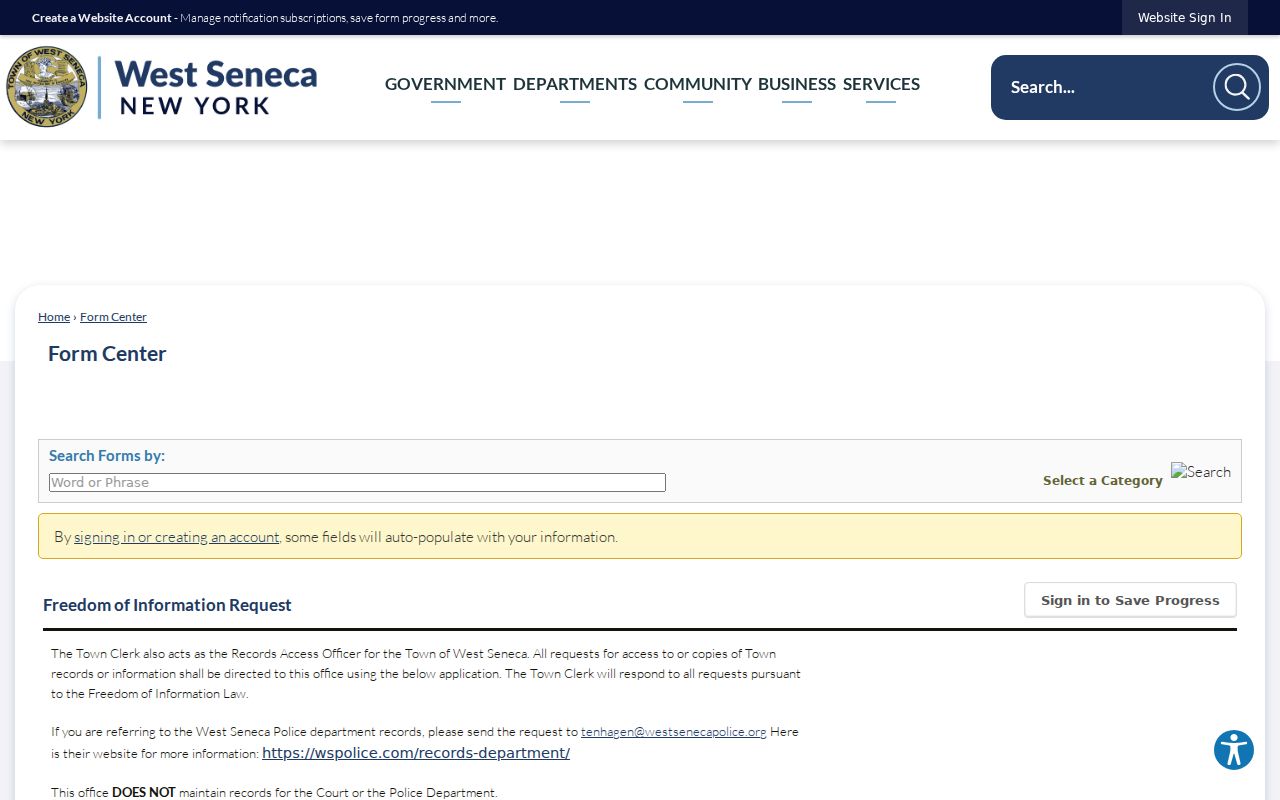
Timing matters with FOIL. Under Public Officers Law §89(3)(a), an agency generally answers within five business days. The reply may grant or deny the request. It may say the record is lacking. It may also acknowledge the request with an approximate date. That deadline is a response rule only. A long historical search does not have to finish inside those five days.
West Seneca Historical People Sources
Historical resident research turns on geography and volume. B&ECPL's Grosvenor Room holds Buffalo City Directories from 1828 forward, with listed gaps. Suburban Erie County towns were published separately, though. Most of those runs began in the 1950s. For many West Seneca searches, the collection guide points to more useful series. These include Erie County Suburban, Southeast Suburban, Buffalo Suburban, Buffalo South Suburban, and Haines directories. The digitized Buffalo City Directories collection holds 77 objects dated 1832 to 1913. Buffalo coverage still cannot be assumed for every West Seneca household.
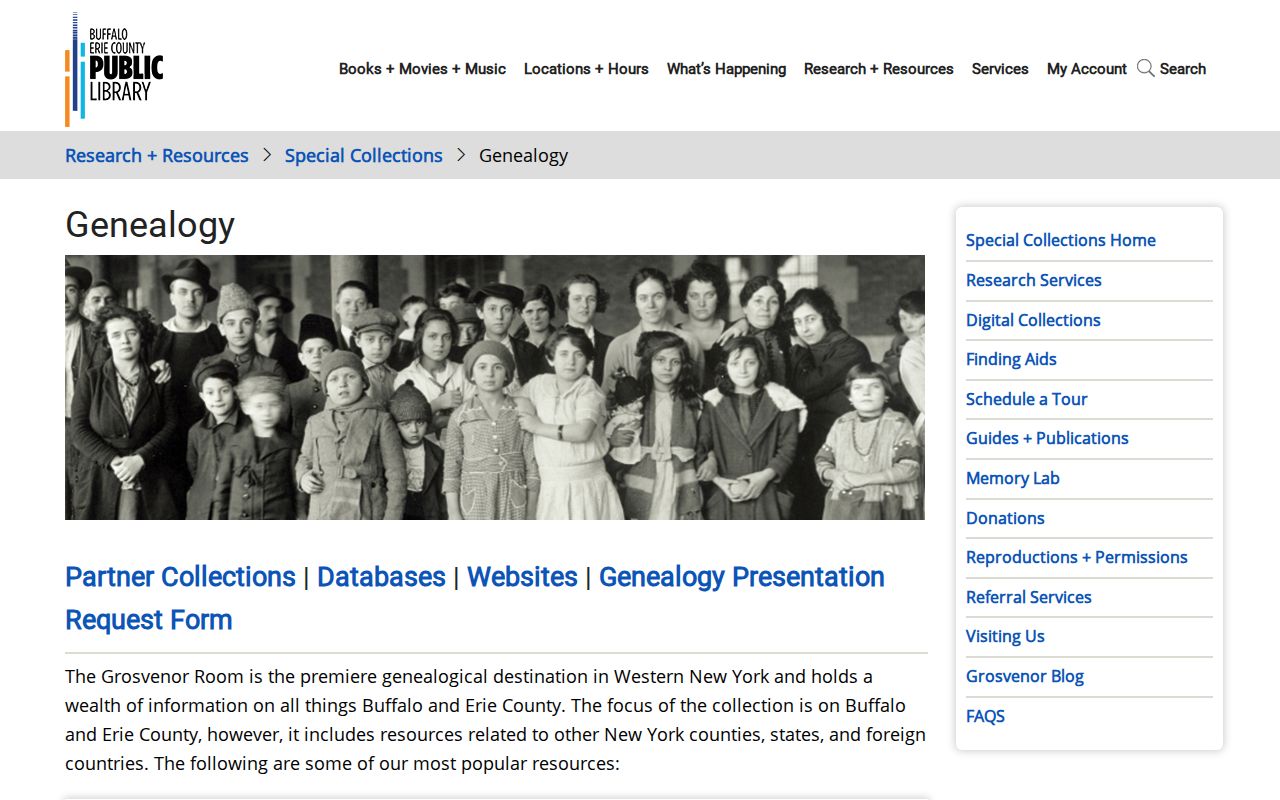
The Grosvenor Room genealogy collection goes beyond directories. Census access, newspapers, maps, yearbooks, local histories, and research assistance all sit alongside them.
A directory hit earns trust through corroboration. Keep the printed year, exact locality, and address together with a second source such as a census, deed, cemetery guide, or obituary, and the West Seneca result becomes far stronger.
West Seneca Names Before 1852
Older West Seneca research often changes course, because the locality name itself changed. The town incorporated as Seneca in 1851. A year later, in 1852, it became West Seneca. Its land came from parts of Cheektowaga, Hamburg, and East Hamburg. Historic materials may also say Ebenezer, Gardenville, Blossom, or another hamlet label. These are not casual spelling variants. They are catalog and place clues. They decide whether a library, newspaper, church, cemetery, or archive search lands on the right item. The Town's history resource gives the municipal timeline. The Historical Museum preserves an especially documented Lower Ebenezer house history. When taking notes, preserve each source's own place spelling. In a request, add the modern West Seneca term too. Then a custodian can search both paths.
Note: The Town publishes no town-wide street-renumbering project. So an old address calls for a source-by-source locality check rather than an invented conversion.
Official West Seneca Records Compared
Official sources run narrower than a private profile service, and those limits are worth knowing. A County parcel record shows how the assessment system carries a property. BrowserView reveals recorded-document parties. A library directory preserves one dated printed listing. Each one comes with a custodian. A date is part of the record, and so is a way to inspect the original context. Private profile products can be incomplete, stale, or quick to merge people with similar names. So they never replace a West Seneca custodian's record.
| Official West Seneca trail | Best use | What it does not settle |
|---|---|---|
| Parcel and tax data | Assessed ownership and property identifiers | Every person who occupies a property |
| Recorded deed index | Documented party and legal-description chain | A party’s later residence |
| Library directory shelf | A dated historical listing | Continuous residence between editions |
West Seneca Records Access Work
West Seneca drew a $65,185 Local Government Records Management Improvement Fund award in the 2025 to 2026 award cycle. The grant funds document conversion and access. That is a real sign of investment. The award listing, however, does not name the particular records series. It should not be read as proof of full online access. Not every Town permit, minute, license, or historical file is now searchable online. A current West Seneca request still needs the same basics. Name the department. Explain the record class. Give an address or date range when known. Then ask the custodian what is currently available.
The New York State Archives award listing is the source for the grant. The practical lesson is simple: check the Town's published pages first. Then turn to the Town Clerk or the right department for material that has not been placed online.
West Seneca Privacy Boundaries
Gaps in a West Seneca search can be intentional. New York's Address Confidentiality Program, created under Executive Law §108, gives eligible participants a substitute mailing address. It stands in place of their real one. Confidential voter registration works differently. Election Law §5-508 keeps those rolls closed to public inspection for four years. Participants may renew that protection when it expires. Driver records, utility customer files, and most court or vital-record details carry limits of their own. When an address is protected or simply absent from a residents directory, treat that boundary as final. It is not a puzzle to work around.
Historical West Seneca Resident Directories
Old West Seneca resident directories read best as snapshots, not proof of where someone lives now. The 1870 Buffalo and Erie County register covers one era. The 1917 Farm Journal rural directory covers another. Town-arranged Erie voter directories spanning 1926 to 1971 cover still more, and suburban titles with Haines countywide coverage after 1968 extend the run. A single entry might list a name, address, occupation, a spouse or widow notation, or the familiar h/r convention. That is real detail. Still, an entry alone proves no legal ownership. It never names every person in a household.
The West Seneca City Directory collections lay out the holdings, the gaps, the reverse sections, and a sound household-tracing method. Pair the directory year with a census record, map, deed, obituary, cemetery listing, or probate lead before you settle a family-history conclusion.