
West Seneca Resident Lookup Records
A useful name check is question-specific, not a combined list of people. Erie County property data can identify the assessed owner of a parcel and the parcel identifier. A recorded document can place a named party in a deed or mortgage. Courts can confirm that a covered case exists. Town, state, and archival routes each answer different questions. A property mailing address remains correspondence information, not proof that a person lives at the parcel. Historic directories and yearbooks are dated snapshots, not current records.
| Record | What It Confirms | Where | Access |
|---|---|---|---|
| Parcel and tax record | Assessed owner, parcel/SBL, situs and owner mailing fields | Erie County Real Property Tax Services | Public property route; ownership does not establish occupancy. |
| Recorded instrument | A party's connection to a deed, mortgage, lien, or related filing | Erie County Clerk BrowserView | Deed index begins in 1986; images may be restricted or require counter help. |
| Court case | Covered case caption, court, case number, and date | New York court portals and the proper clerk | Scope and sealed-record limits vary by court and case type. |
| Vital event | A qualifying Town or state birth, death, marriage, or divorce record | NYS Department of Health Vital Records | Certificates are restricted by Public Health Law §4174. |
| Historical listing | A person listed in a particular year and collection | West Seneca Library or B&ECPL Grosvenor Room | Use the correct town, title, and year before drawing a conclusion. |
Begin with the narrowest known fact. An address can lead to a parcel and SBL, while a date of death may point to an obituary or a restricted vital-record route. A family-history question may call for the Grosvenor Room, which holds directories, microfilm, maps, yearbooks, and New York vital-record index microfiche. For a Town-created record, the Town Clerk is the local registrar and Records Access Officer; county land records and most court work move to Buffalo. Those custody lines make a name search more accurate and save a request from going to the wrong office.
Confirming a West Seneca Resident
Use two independent records before treating a name match as reliable. For a current recorded connection, the usual bridge is name or address to county property data, then parcel/SBL to an Erie County Clerk document. BrowserView does not offer an ordinary street-address search. Its Party Name mode expects last name first, without a comma, and the result can be narrowed with Town of West Seneca, date, or document type. Compare the legal description, Book/Page or instrument number with the parcel before assuming that a similarly named party is the same person.
- Search the county property route by the known address, owner name, or SBL and record the parcel's situs, owner, SBL, and any Book/Page or deed-date reference.
- Use that bridge in BrowserView. Check the party role, recording date, legal description, and instrument number rather than relying on a name alone.
- For a court matter, search the portal that covers the case type, then compare the court, case number, role, and date with the known facts.
- Ask the office that holds the original record for an official copy or correction route when a consequential fact remains uncertain.
The same-name problem is common in any name verification. A middle initial, a spouse or relative, a legal description, a business affiliation, or a relevant time period can separate two people with the same name. Do not turn an old directory entry, a case caption, a license result, or an owner mailing field into a current-residence claim. The West Seneca city directory collections are better suited to checking whether a household appeared in a specific historical year.
- Docket
- A court's running case record, usually tied to a court and case number rather than a home address.
- Index and image
- An index is the searchable listing of record details. An image is a view or copy of the underlying document and may have separate access rules.
- Certified copy
- A copy issued and authenticated by the custodian. It is different from a library index entry or a portal result.
West Seneca Court Name Records
Court names need a court-type check first. West Seneca Town Court is local, while Erie County Supreme Court, County Court, and Surrogate's Court are separate custodians. WebCivil Supreme is for New York Civil Supreme Courts only. It offers party, index, attorney or firm, justice, calendar, document, and eTrack routes. A party search can provide a useful caption lead, but it does not represent Town Court, criminal, Family Court, or sealed matters.
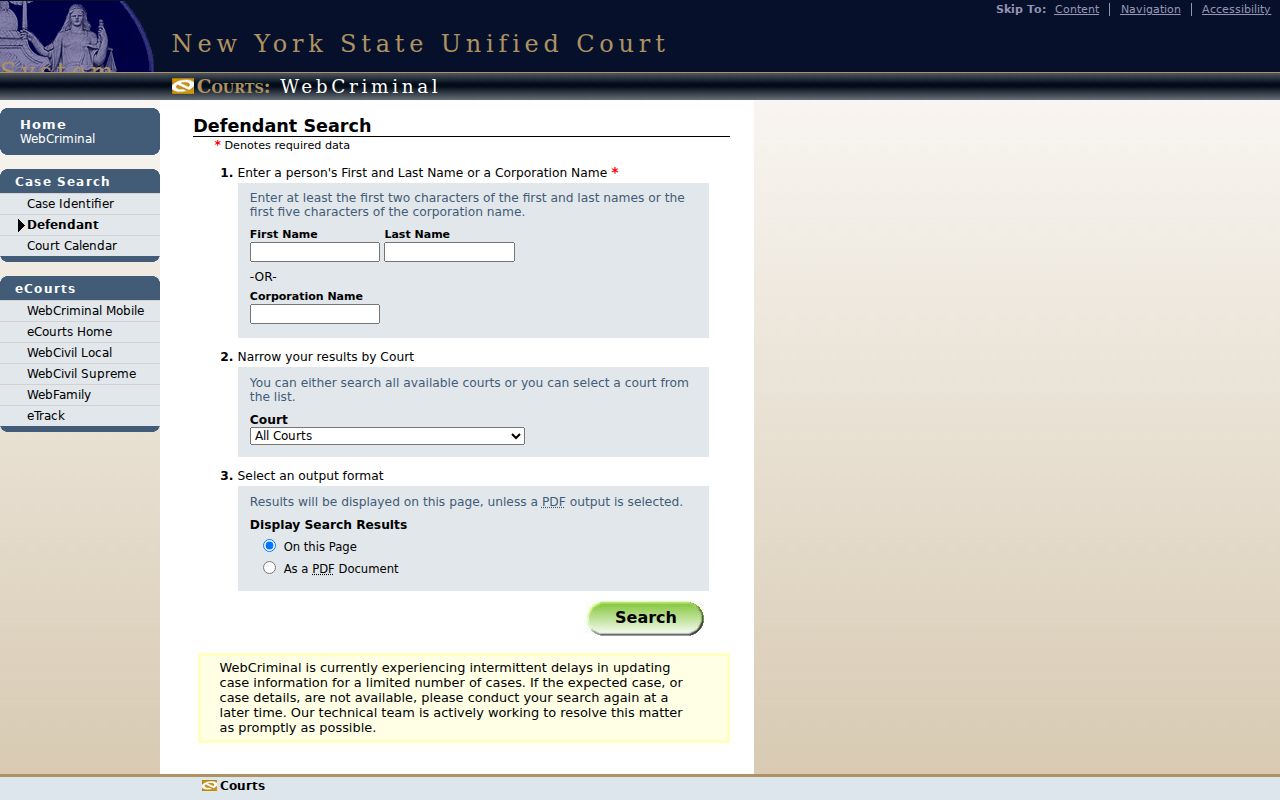
For covered criminal cases, WebCriminal Defendant Search requires first and last name or a corporation name. The form asks for at least two characters of each personal name, offers a Court dropdown, and can display results on the page or as a PDF. Its own notice reports intermittent update delays. Confirm a hit with the named court clerk. Estate and heir questions belong with Erie County Surrogate's Court, where coverage and online access can differ from the civil and criminal portals.
The official WebCriminal form shows why a court result must be narrowed to a case and court before it can support a name match.
A displayed case is still not a statement of residence. The court clerk, not a general Town records request, handles the file and copy process. Sealed, expunged, juvenile, Family Court, adoption, and other restricted matters remain outside a public name search.
Note: An online court nonmatch can reflect the wrong court, a limited display window, a spelling difference, or a record restricted by law.
West Seneca Vital Record Limits
Vital records are verification documents, not an open name directory. The West Seneca Town Clerk holds a death certificate when the death occurred in the Town and a marriage certificate when the license came from that office. The New York State Department of Health is the backstop for births, deaths, and marriages outside New York City from 1881, as well as statewide divorce certificates. A West Seneca resident may have had an event elsewhere, so a Town search cannot be assumed to cover every event in that person's life.
Public Health Law §4174 controls who may receive certified copies, and those records are not available through FOIL. The Town lists a $10 certified copy for birth or death records and New York State lists a $30 mail certified search/copy route with ordinary processing of 10 to 12 weeks. Genealogy access is different: New York describes birth records at least 75 years old when the person is deceased, death records at least 50 years old, and marriage records at least 50 years old when both spouses are deceased. Direct-line descendants may qualify earlier with supporting proof.
For an adoption-related family connection, the NYS Adoption Information Registry is the official consent-based route. It has no registration fee, but it cannot search for missing registrants or release sealed original records simply because a request is made. Eligible parties register and consent under the program rules. That is a narrow, safeguarded route for a particular family question, not a way to look up a resident.
West Seneca Voter Lookup Boundaries
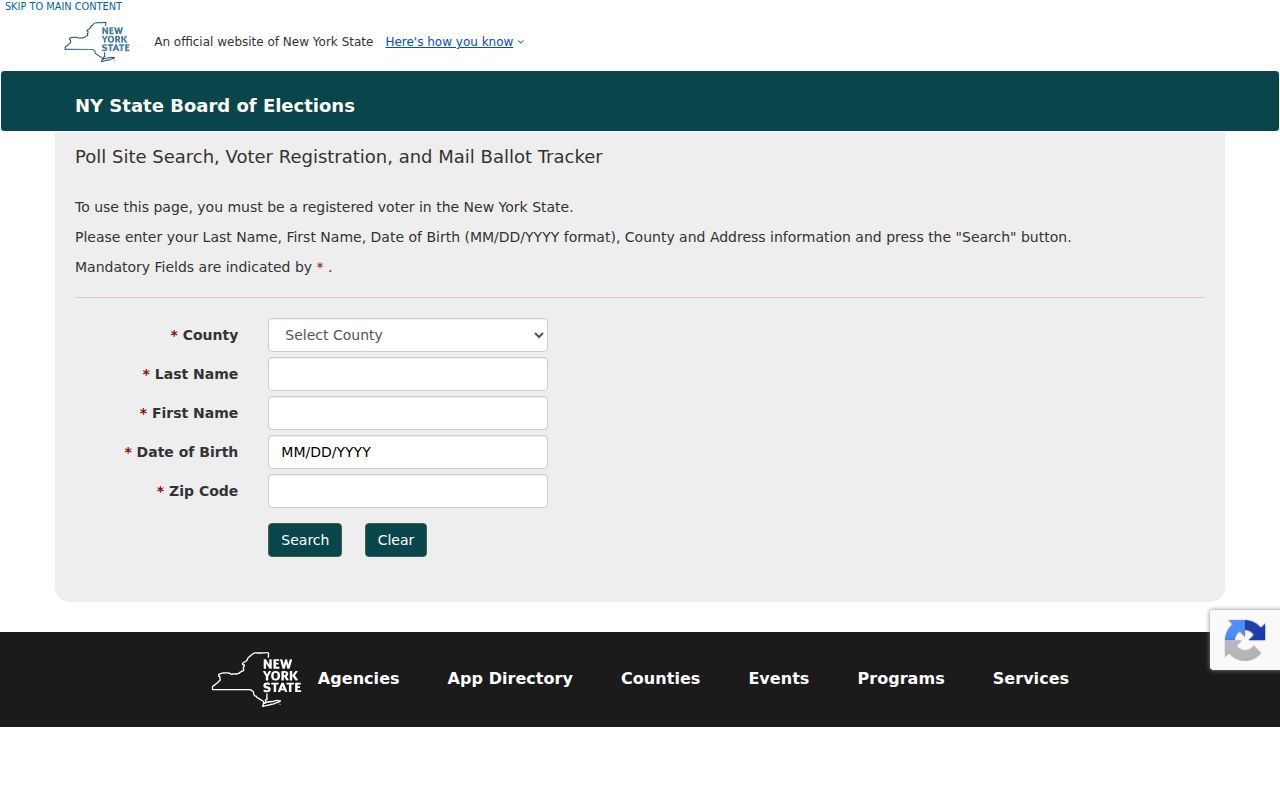
New York's two voter paths are easy to confuse. NYS VoterLookup is a registered voter's own status tool. It asks for last name, first name, date of birth, county, and address information, then returns matching registration, poll-site, and ballot-tracker information. It is not a public name-to-address or by-street search. That limit applies even when a person already has a West Seneca address in hand.
Election Law §3-103(5) restricts voter-registration data to an elections purpose. Erie County's voter-data request form asks for a purpose, geography, output, and certification, including a noncommercial-use statement. It cannot be repurposed into a current household list. The useful contrast is simple: self-service status is designed for the individual voter, while Board-held data have a purpose-controlled request process. Neither tool confirms who occupies every home around a parcel.
The official VoterLookup screen shows the identity fields required for an individual's own registration check.
Use a voter result only for its stated purpose. A historical town-arranged voter directory at the library is a dated research source, and it does not reveal a ballot choice or create a current household directory.
West Seneca Confidential Records
An absent address can be a lawful protection, not an error. New York's Address Confidentiality Program, under Executive Law §108, provides a substitute mailing address and mail forwarding for qualifying participants. Government agencies use that substitute address unless a specific exception applies. The program does not create a trail for the public to trace. Public Officers Law FOIL rules also retain privacy and safety exemptions, while DMV information has separate federal permitted-purpose limits.
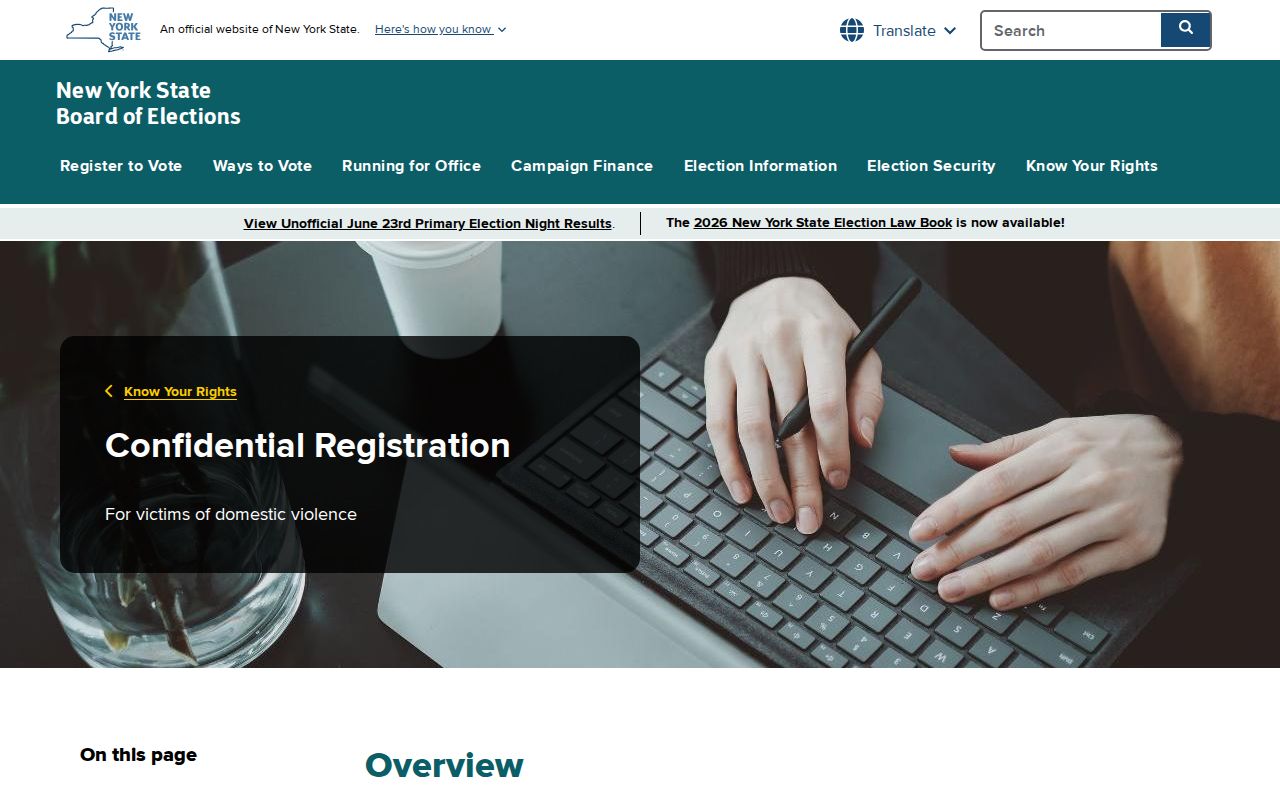
Confidential voter registration has its own rule. Under Election Law §5-508, an accepted confidential registration is kept apart from other voter records and is unavailable for public inspection or copying for four years, subject to renewal. The New York confidential-registration information describes that protection and its statement process.
These protections are one reason a responsible name check accepts a nonmatch. A protected address, a confidential voter record, or a redacted field should never be treated as an invitation to seek private household information elsewhere.
Note: If a court, assessment, voter, or vital-record detail is wrong, contact the custodian that created it instead of attempting to reconcile it privately.
West Seneca Record Fallbacks
When a portal does not answer the question, use the record's actual access channel. Town records can be directed to the Town Clerk or, for a nonexempt Town department record, a focused FOIL request that states the address, date range, and record class. The Town form is not for court or police records. Erie County Clerk material can be requested at the historic-record counter at 92 Franklin Street in Buffalo, where older deed books and copy requests fill the gap before the online index. B&ECPL's Grosvenor Room supplies directories, maps, microfilm, and a limited remote research service.
New York FOIL, Public Officers Law article 6, generally calls for a grant, denial, acknowledgment, or statement that the agency lacks the record within five business days. That response rule is not a promise that a large historical search will be completed in five days. A precise request helps the records officer identify the right file and decide whether an exemption or redaction applies. For court copies, go to the court clerk under the court's own rules. For certificates, use the Town or state vital-record application route.
West Seneca Privacy Limits
Official records and commercial people-information products serve different purposes. An official parcel or court record identifies its custodian, date, and record type, and it can be checked at the source. A commercial category may combine stale entries from several places, omit a name, or merge people with similar details. Neither kind of result replaces a careful match of independent identifiers. For family history, estate questions, reconnecting, or a concern about a recorded document, the direct office, library, or archive is the route that preserves context.
Lawful use. Use West Seneca records for personal, lawful research. Stalking, harassment, threats, impersonation, or attempts to intimidate another person can violate New York law.