
West Seneca Previous Residents by Era
A West Seneca address history moves through several custodians. Erie County property data gives the current parcel context. The County Clerk records the deed chain. The Grosvenor Room supplies regional, suburban, and address directories, while census and map resources add dated household or building context. Start with the newest stable identifier and select an older source that matches the interval being studied. A recorded transfer date is not the same as a move date for every person who lived there.
| Trail source | Years or scope | Custodian or location | What it can establish |
|---|---|---|---|
| Erie parcel data | Current parcels stated through 2025; historical downloadable data from 1999 | Erie GIS and Real Property Tax Services | Parcel fields, assessed owner, mailing/situs data, and selected transfer references. |
| Clerk deed records | Deeds held 1808 to present; index online from 1986; images online from 1960 | Erie County Clerk | Recorded parties, instruments, dates, Book/Page, and legal descriptions. |
| West Seneca and suburban directories | Named 1949 and later runs; Haines all Erie County from 1968 | Grosvenor Room | Address-to-listed-person leads in the correct edition. |
| Federal census | 1790 to 1940 database; 1950 released in 2022 | HeritageQuest or NARA through B&ECPL | A dated household snapshot, not an annual address list. |
| Sanborn Maps of New York | 1867 to 1970 database; exact West Seneca sheet to confirm | B&ECPL genealogy resources | Building footprint, material, land use, and neighborhood context. |
Use this order as a time map, not as a promise that every house is in every source. The 1870 Buffalo/Erie County Register and farmer directory and the 1917 Erie County rural directory are early countywide leads. Neither makes Buffalo city coverage automatic for West Seneca.
West Seneca's SBL and Book/Page Bridge
West Seneca previous residents research becomes more dependable once an address is connected to the parcel's SBL, or section-block-lot reference. Erie GIS also carries a PIN, which begins with the county SWIS code and continues with section, block, and lot components. Parcel fields identify the situs address, current assessed owner, owner mailing information, local ZIP, deed date, and sometimes Book/Page. The County cautions that Book/Page fields are available only for parcels sold in roughly the last 10 to 12 years.
Use Erie County's property search or On-Map to capture the parcel bridge before opening a deed search. A situs address tells where the parcel sits. A mailing address is correspondence information and may be elsewhere. Neither field is a list of all people who lived at the property.
The Erie County Clerk Official Records Public Search is the next channel once a party, parcel, Book/Page, or legal description is known.
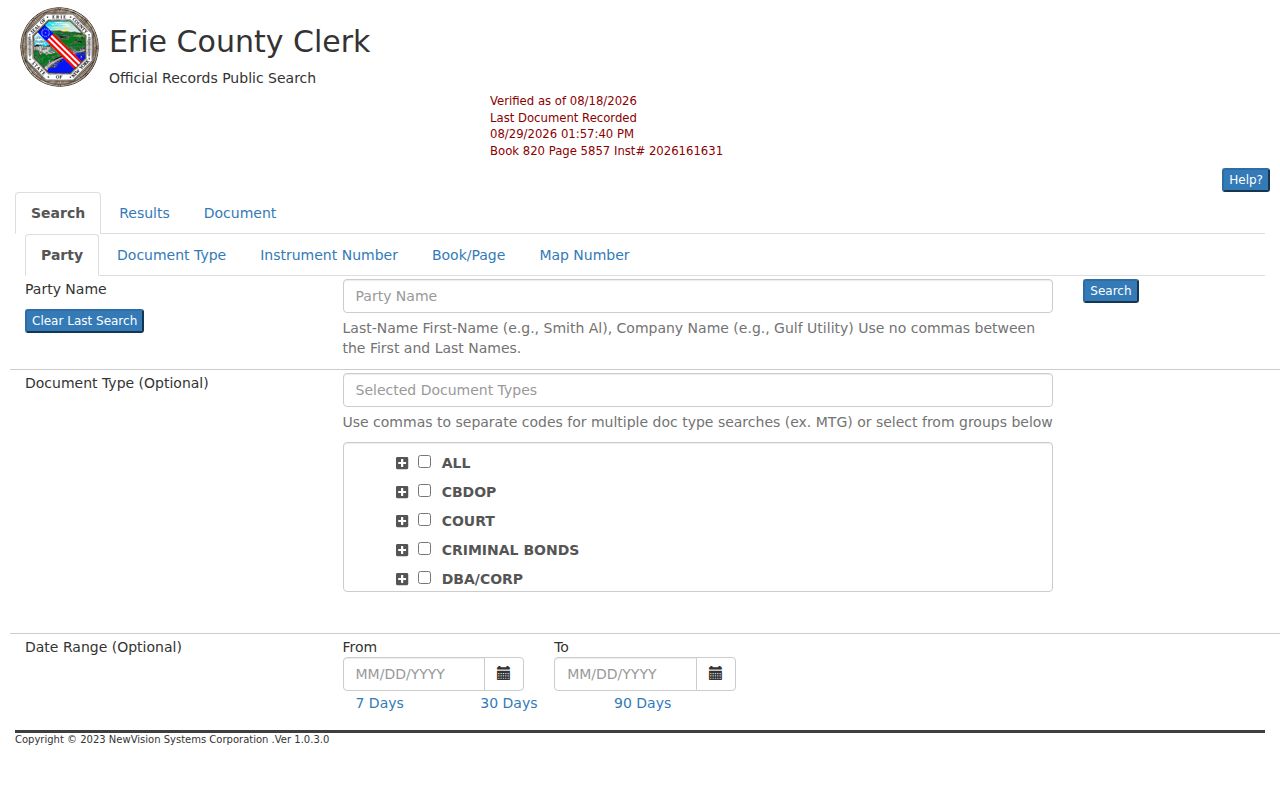
BrowserView is a document index rather than a street-address directory. Its useful search route is address to parcel data, then Book/Page, file number, party, town, or legal-description information to the Clerk's index. That address gap is a local quirk worth recording in every house-history note.
Note: Save the source date with each parcel field because assessment data and recorded-document data serve different purposes and can change independently.
Trace West Seneca Deeds Backward
Property records can trace prior owners, which is only one part of identifying past residents. Start with the current parcel's owner name, SBL, deed date, and Book/Page when present. In BrowserView, record the document's grantor, grantee, instrument number, recording date, legal description, and consideration. The legal description matters because an old instrument may omit the modern street address while preserving a lot, subdivision, or map reference.
- Find the West Seneca parcel and copy the SBL, current assessed owner, situs address, deed date, and available Book/Page.
- Search BrowserView by parcel identifier or the document bridge, then confirm the town and legal description in the resulting metadata.
- Read the purchase deed to identify the seller, who is the grantor in that transaction.
- Search that seller as a later grantee or party, using a date range, town, lot/block, or legal-description wording to find the earlier acquisition.
- Repeat the comparison backward and stop when the online record no longer supplies enough detail for a sound match.
- Grantor
- The party transferring an interest in the recorded document, often the seller in a deed.
- Grantee
- The party receiving the recorded interest, often the purchaser in that deed.
- Chain of title
- The sequence of recorded transfers for the same parcel, checked through parties and land description.
- Legal description
- The recorded lot, block, map, subdivision, or parcel language that identifies land more reliably than a changing street address.
A deed connects named parties to a recorded transaction. It does not independently show every household member or the exact day a family moved into or out of a house.
West Seneca's 1960 to 1985 Bridge
The County's coverage dates create an important split in a West Seneca house history. Deeds are held from 1808, online deed images begin in 1960, and routine online party indexing begins in 1986. For a transfer from 1960 to 1985, use the Book/Page reference and the Graves Index route identified in the research rather than assuming a modern party-name search will surface the document. Match the result to the SBL, subdivision, lot, or legal description.
Before 1960, move from the online interface to the Clerk's historic-record path. The Clerk's counter is at 92 Franklin Street in Buffalo, and its document request form can take Book/Page or another identifier. Give the custodian the address, SBL or legal description, date range, and requested record type. This is more effective than submitting a broad name-only request.
Manual searching is documented at $10 per two-year period, name, and document type. The Clerk also publishes distinct copy and certification guidance, so confirm the current fee and request method before relying on a number from an older instruction.
West Seneca Previous Residents in Dated Sources
Once a deed interval is known, historic listings can help answer who lived at the address during it. Town-arranged Erie voter-registration directories cover 1926 to 1971 in the library holdings. Haines Directory covers all Erie County from 1968. The Grosvenor Room also identifies Erie County Suburban for 1949, Southeast Suburban for 1963 to 1966 and 1968 to 1979, plus later Buffalo Suburban and Buffalo South Suburban runs. Confirm the title's coverage before treating a name as a West Seneca listing.
Use a printed address section or correct Haines edition for address-to-name work. The historical collections themselves, their gaps, and their entry conventions are described on the West Seneca city directory page. Pair a listing with a census near the target decade, then test the family composition, age patterns, birthplace information, and name variants. Directories provide annual or periodic clues; census schedules provide a dated household snapshot.
The Buffalo City Directories collection on New York Heritage is the source for the digitized Buffalo run.
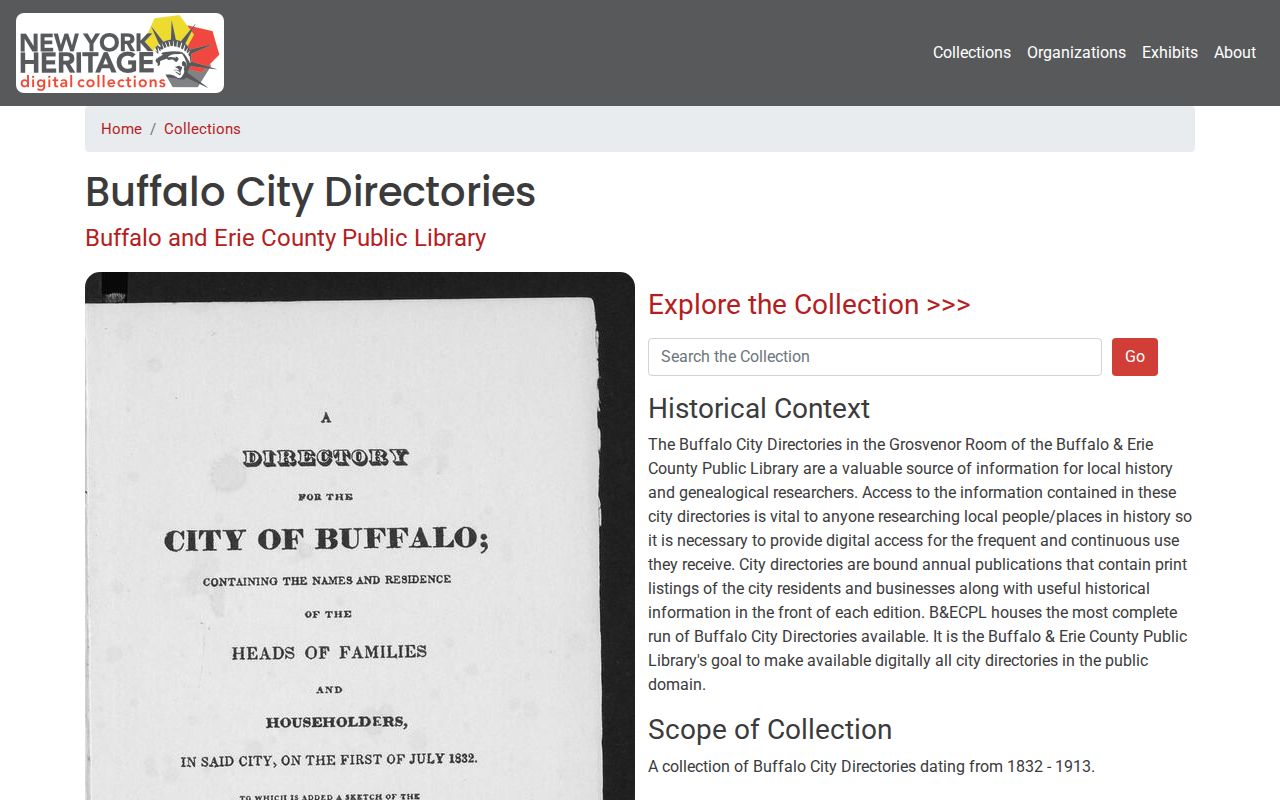
The 77-object collection covers 1832 to 1913. It is a valuable regional reference, but the geography test still matters because Buffalo volumes do not automatically cover every West Seneca household.
West Seneca's Earlier Place Names
Locality names can break an otherwise careful previous residents search. The Town was organized as Seneca in 1851 and renamed West Seneca in 1852. It was formed from portions of Cheektowaga, Hamburg, and East Hamburg. Catalogs, newspapers, parish material, and directories can therefore place a family under Seneca, a parent town, or a historic hamlet rather than the present municipal label.
Try the terms that fit the time and place: Seneca, West Seneca, Ebenezer, Gardenville, Blossom, Lower Ebenezer, Middle Ebenezer, Upper Ebenezer, and New Ebenezer. No official source examined for this research identified a town-wide street-renumbering year. Keep that unknown separate from the documented town-name change.
The West Seneca Historical Museum documents a rare, well-sourced local house narrative.
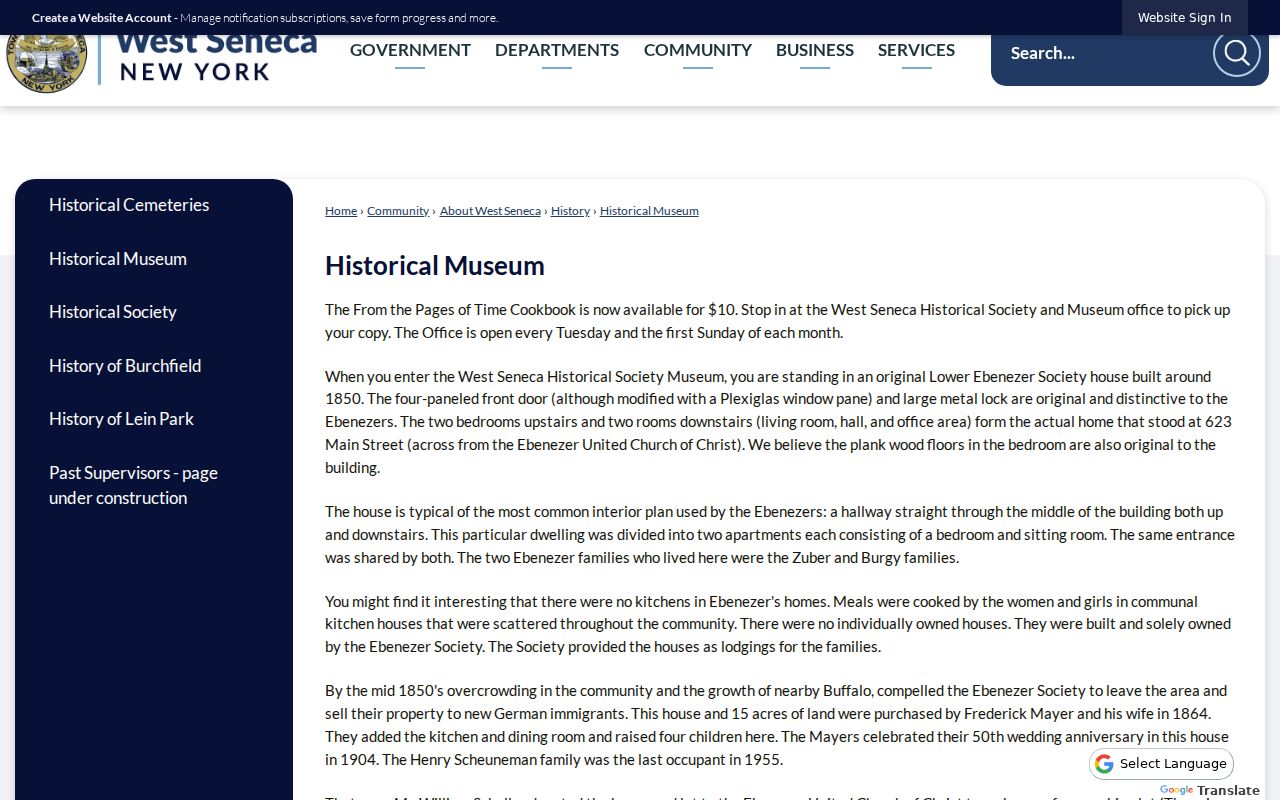
The Lower Ebenezer Society house was originally at 623 Main Street, moved to 919 Mill Road in 1956, and has Town-sourced named occupants spanning early Ebenezer families through the last occupants in 1955. It shows the standard for a specific house claim: a named source, a place history, and an identifiable sequence, not an unsupported address story.
Past West Seneca Households Beyond Deeds
Owners are not always the past residents of a West Seneca house. Use the deed chain to date ownership, then use a directory, census, yearbook, newspaper, church, cemetery, or probate source that actually fits that period. B&ECPL's Grosvenor Room has newspapers on microfilm, a Local History File strongest for 1930 to 1982, and yearbooks from the 1880s forward. West Seneca Public Library also maintains an in-library school-yearbook collection, with a 2026 inventory showing continuing additions.
The household sequence can be read as a simple evidence flow: parcel and SBL → recorded deed interval → right-year directory or Haines volume → nearby census → obituary, cemetery, or probate confirmation. Each link has a different role. An obituary or cemetery guide can explain a death or estate transition, but it should still be reconciled to the legal name and parcel description.
Lawful use. West Seneca house-history research fits family history, estate questions, and personal property curiosity. Do not use a historic clue to track, stalk, harass, or harm a living person.
West Seneca House-History Fallbacks
When an online index stops, move to the custodian that holds the next layer. The Erie County Clerk can handle historic deed books and document requests. The Grosvenor Room holds old directories, maps, microfilm, and related research guides. Its guides-publications hub includes architecture, Buffalo house research, directories, maps and atlases, street-name changes, and local-history indexes. Ask staff to identify the right West Seneca atlas, suburban title, or map before relying on a Buffalo-focused guide.
The West Seneca Town Clerk performs genealogical searches, holds burial permits, maintains archival records, and administers FOIL for Town material. The Town FOIL form is suitable for ordinary department records such as a code or permit file, but it does not maintain police or court records. For a permit request, name the address, date span, permit number when known, record category, and whether inspection or a copy is sought.
For a full current address chain after the historic work is complete, use the West Seneca streets directory for the parcel-first method. Retain the record title, date checked, page or document number, and locality spelling with every result.
Note: A clear negative result names the title, date range, locality term, and access channel checked, so the next search does not repeat the same gap.